Vitamin K: The Tiny Shot With a Seriously Big Job 💉

The Vitamin K Shot:
What Every New Parent Should Know 💉
It is NOT a Vaccine!
It's more like an insurance policy for your baby's blood — and it's one of the first decisions you'll make as a parent.
Vitamin K injection 💉
It's been standard practice in the United States since 1961. Here's what's behind the recommendation that every baby get a Vitamin K injection after birth.
What Vitamin K Actually Does 🩸
Vitamin K is a fat-soluble nutrient the body needs to form blood clots. Without it, bleeding is hard to stop. 🚫🩸 It also helps keep bones healthy. 🦴💪 but that is for down the road.
Older kids and adults get vitamin K from food:
- leafy greens 🥬
- meat 🥩
- dairy 🧀
- eggs 🥚
In addition, the good bacteria in our intestines make Vitamin K 🦠
Why Babies Start Out Low 📉
Two things leave newborns short on vitamin K.
- It doesn't cross the placenta easily, so babies get very little from mom during pregnancy. 🤰➡️👶
- A newborn's gut hasn't built up the bacteria needed to produce vitamin K on its own yet. 🦠⏳
The result: babies arrive with tiny vitamin K stores right when they're most vulnerable to bleeding problems. ⚠️🍼
What Is Vitamin K Deficiency Bleeding (VKDB) ❓
VKDB happens when a baby can't form clots and stop bleeding. 🩸 This bleeding isn't always visible. It can happen inside the body, in the intestines or the brain, before anyone notices something's wrong. 😔 About half of babies who develop VKDB bleed into the brain, which can lead to brain damage or death. 🧠⚠️
There are three types of VKDB: 👇
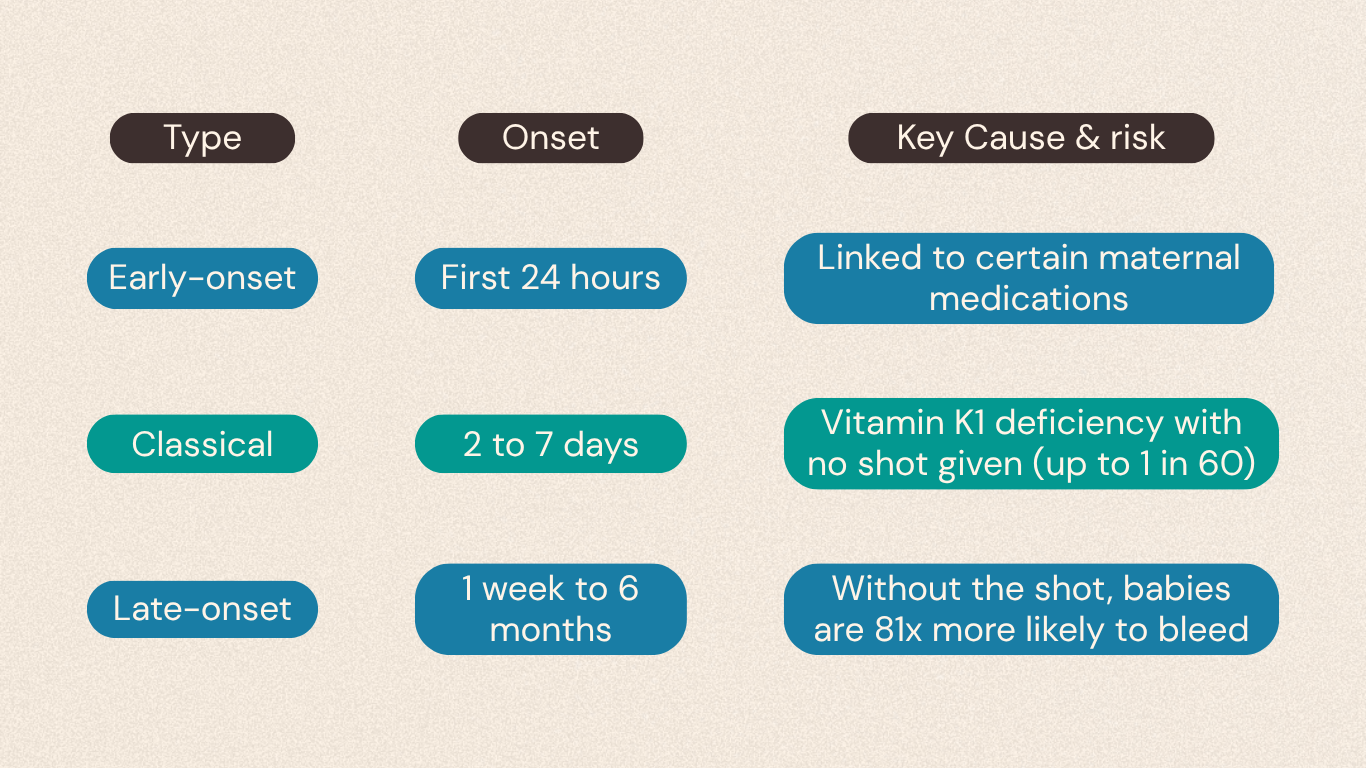
Cases of VKDB are increasing 📈, dure to more parents declining the shot. VKDB itself is uncommon, so a lot of families just haven't heard how serious it can get. 😕
The Warning Signs
(and Why They're Not Enough) 🚩
In most cases, there's no warning before a serious bleed starts. 🚫🔔
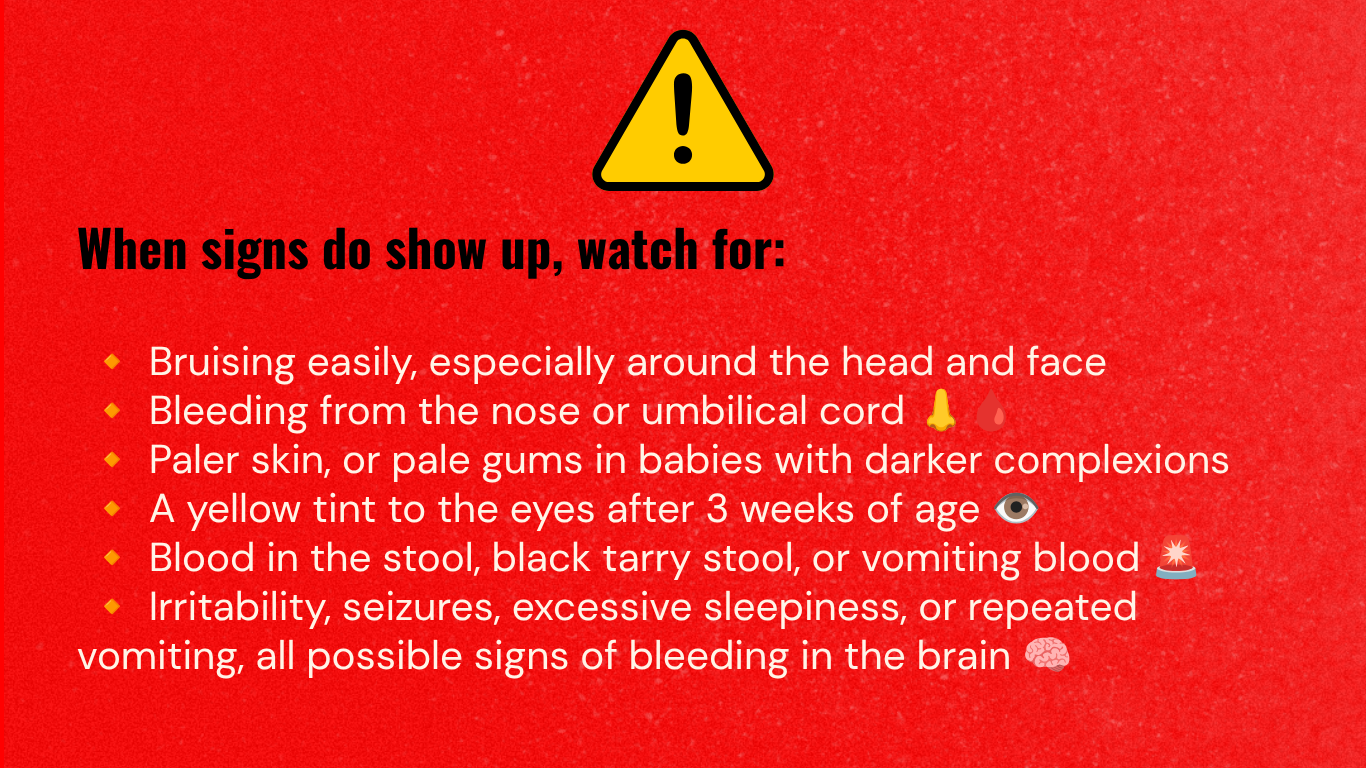
Since these signs are so often absent, the shot at birth is what actually closes the gap ✅,
One Shot, Months of Protection ⏳💉
The vitamin K shot goes into the baby's thigh muscle usually within a few hours of birth. ⏱️ From there, it's stored in the liver and released gradually over the following months. 🫀 That covers a baby until they're old enough to get vitamin K from food and their own gut bacteria, typically around 4 to 6 months. 🍽️
One shot. That's it. ✅
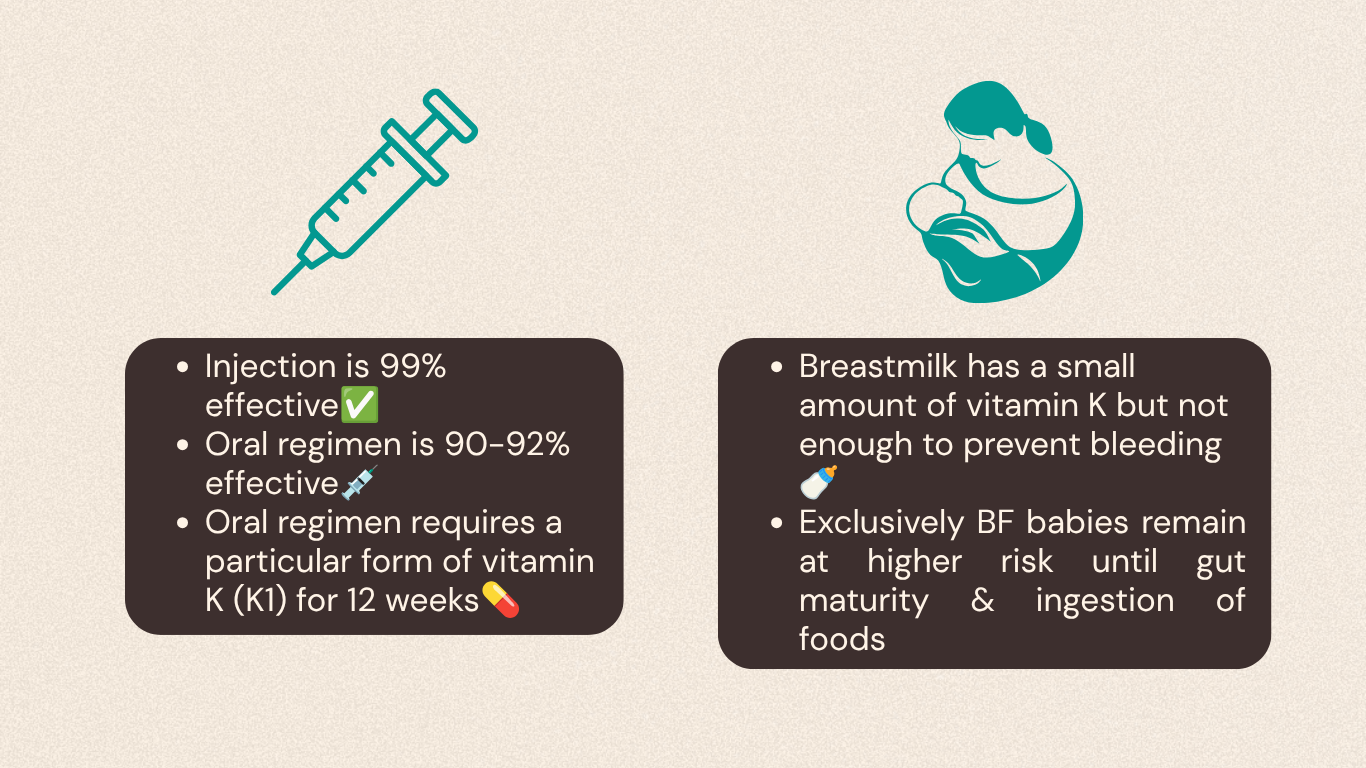
What About Oral Vitamin K or Breastfeeding? 🤱🍼
Is the Shot Safe?
Yes! 🔬
✅ There is NO link to any childhood cancers
✅ The black box warning is for high doses given intravenously which is NOT the same as the small dose babies get in their muscle. These are 2 very DIFFERENT scenarios!
Be Prepared and Informed 💬🗓️
Ask about the vitamin K shot at your next pregnancy appointment, so that you are informed before delivering your baby and not juggling a decision about vitamin K along with many other things after the brith of your baby.